
Iron Brick AI Field Guide · Operating model ·
As AI moves from pilots into mission processes, success depends on clear ownership of strategy, value, adoption, risk, and responsible use.
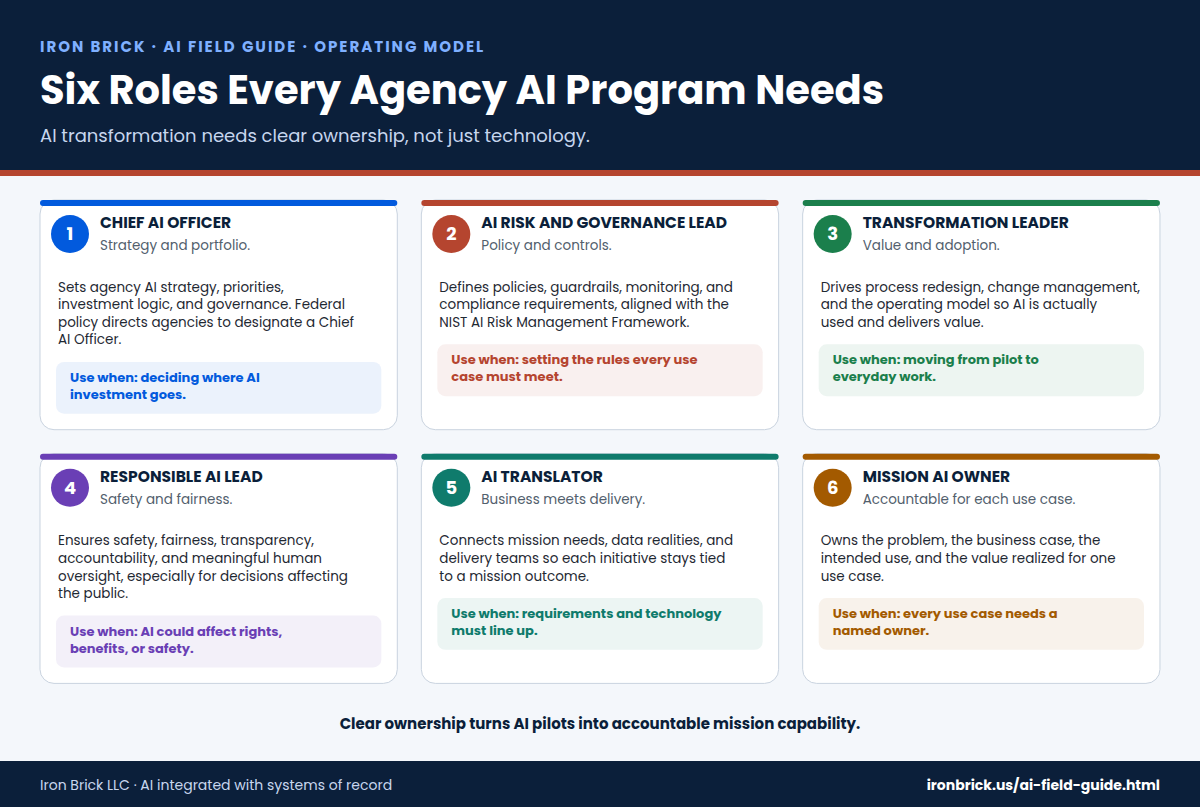
Ownership is the difference between a program and a pile of pilots
Without named owners, AI efforts become scattered pilots, platforms, and experiments that never reach production. Each of these six responsibilities should have a clear owner, even if one person holds more than one in a smaller agency.
How they work together
The Chief AI Officer sets direction and the portfolio. The risk and governance lead and the responsible AI lead set and enforce the rules. The transformation leader and the AI translator connect strategy to everyday work. And every use case has a mission owner accountable for its value and its outcomes.
Where integration partners fit
Programs also need the technical ability to connect AI to systems of record safely: governed APIs, identity, audit, and observability. That is the gap Iron Brick fills, working alongside the agency roles above.
Key takeaways
- Name an owner for each of the six responsibilities.
- Give every use case a mission owner accountable for value and outcomes.
- Align risk controls with the NIST AI Risk Management Framework.
- Pair the operating model with governed technical integration.